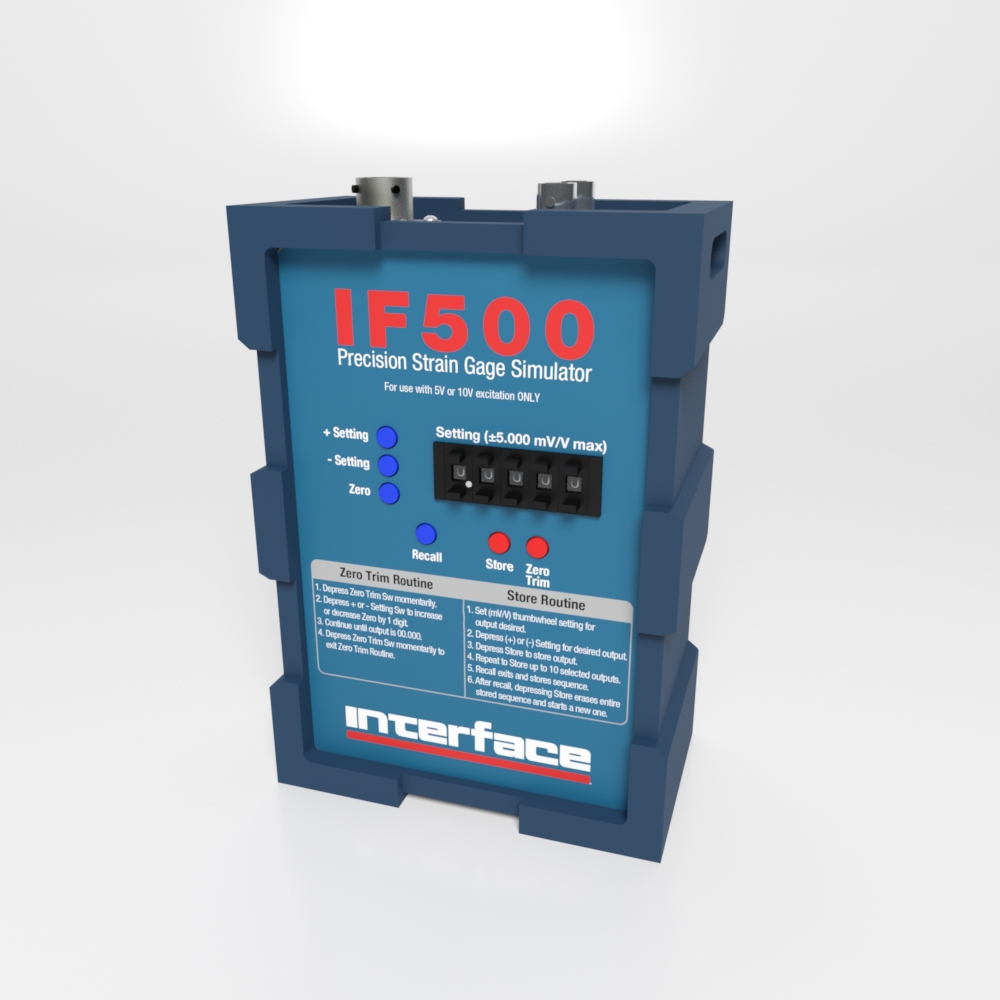
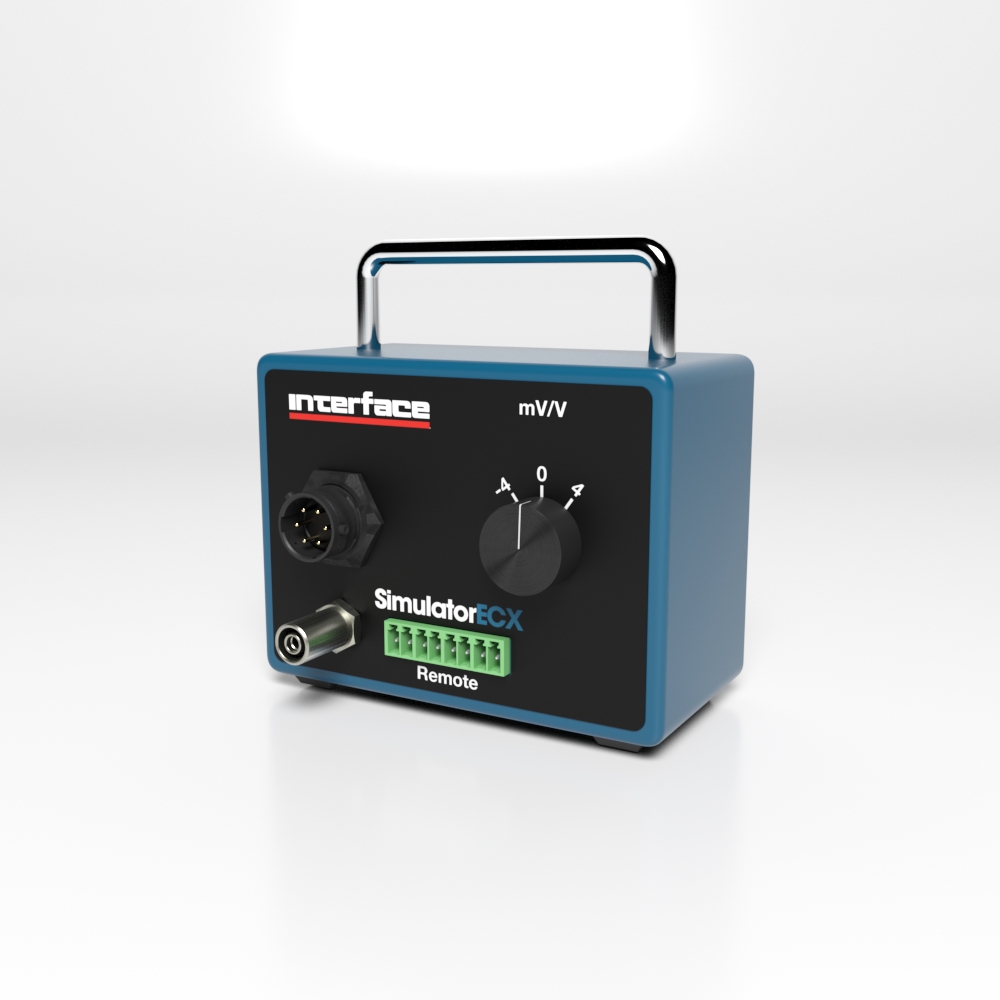
Interface Load Cell Simulators serve a variety of purposes, including testing, calibration, and troubleshooting of weighing systems by replicating the electrical output of a load cell. By generating a precise millivolt-per-volt (mV/V) signal, they enable users to verify weighing indicators, amplifiers, and controllers without requiring an actual load cell. Widely used by manufacturers, field technicians, and researchers, these simulators aid in diagnosing system issues, validating instrumentation, and ensuring accurate force measurement. With features such as adjustable output, compatibility with various excitation voltages, and a compact design, load cell simulators are essential for maintaining and optimizing weighing and force measurement systems.
| MODEL | GOOD | BETTER | BEST | BEST |
| Evaluator 3 | IF500 | CX | ECX | |
| Output Accuracy | 0.1% | 0.02% of setting for one year | 0.0015% of setting for one year | 0.0025% of setting for one year |
| Temperature coefficient (ppm/deg °C) | ±5 | ±5 | <5 of setting | <5 of setting |
| Range (mV/V) | ±4.5 | ±5.0 mV/V | ±6 (Model dependant) | ±4 (Model dependant) |
| Number of Settings | 9 | Anything between 0 and ±5.0000 | 2 to 12 (Model dependant) | 2 |
| Typical Use | Troubleshooting | Troubleshooting / Instrument Scaling | Troubleshooting / Instrument Scaling / Metrology Labs | Troubleshooting / Instrument Scaling / Metrology Labs |
| Instrument Substitution Testing per ASTM E74 | NO | NO | YES | YES |
| Allowable Excitation | ANY | 5 or 10 V (Does not work at other excitation voltages) | ANY | ANY |
| Cost | $ | $$ | $$$ | $$$ |