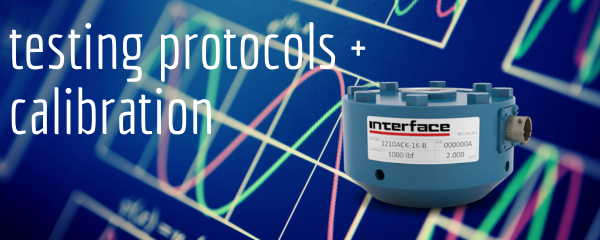
The first step in creating test protocols and calibration use cases is to define the mode you are testing. Load cells are routinely conditioned in either tension or compression mode and then calibrated. If a calibration in the opposite mode is also required, the cell is first conditioned in that mode before the second calibration.
It is important that the test protocol, which is the sequence of the load applications, is planned before any determination of possible error sources can begin. Typical error sources in force test and measurement are usually identified as being related to:
Lack of protocol
Replication of actual use case
Conditioning
Alignment
Adapters
Cables
Instrumentation
Threads and loading
Temperature
Excitation voltage
Bolting
Materials
If you are looking for additional references on testing protocols and calibration, our Interface Load Cell Field Guide is available to help. You can also check in with our calibration and application experts for technical support and assistance.
Don’t forget to schedule your annual recalibration service with our experts. Go here to schedule now.
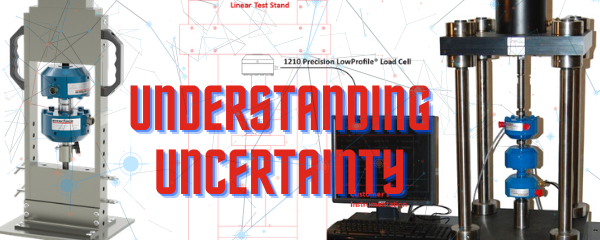
Understanding Uncertainty in Load Cell Calibration
One of the key factors of calibration and recalibration is understanding how to estimate practical uncertainty in load cell calibration. Each application is different in terms of its uncertainty requirement. It is critical to understand the uncertainty requirement on the application to ensure the force measurement device used is calibrated to handle the project. The first thing to understand when estimating uncertainty in load cell calibration is the GUM, a guide to the expression of uncertainty in measurement. Interface has provided a list of factors that will help guide you as you determine uncertainty for your application.
Interface Solutions Used in Urban Mobility Markets
Interface customers utilize our standard and custom products in the vehicle and mobility markets primarily for two reasons:
Test the force and torque of components for validation or design improvements
Integration of sensor technology into a component or product for functional real-time performance data
The range of products used includes Interface load cells, mini load cells, subminiature load button load cells, rotary and reaction torque transducers, instrumentation, and accessories. Trends in digital requirements have seen an increased demand for wireless and Bluetooth solutions. Interface is also frequently engaged on specific customer requests for engineer-to-order products and custom solutions.
During this approaching holiday, we want to sincerely thank you. You are important to us. We are grateful for your trust and patronage. On behalf of the entire Interface family and our extended global network, we wish you and yours a fulfilling holiday.
Please note that in celebration, Interface will be closed for the Thanksgiving holiday on November 26-27. We will be back to creating, building, and supporting all of you promptly on Monday, November 30. As always, you can drop us a quick note here. You can also reference our online support resources here.
EXTRA, EXTRA!
Read more about the trends in automotive lab and line testing, including ICE, EV, drivetrain, and accessory, that are using new torque and force measurement solutionsnecessary for safety, performance, and quality. Click here to read our latest automotive industry post.