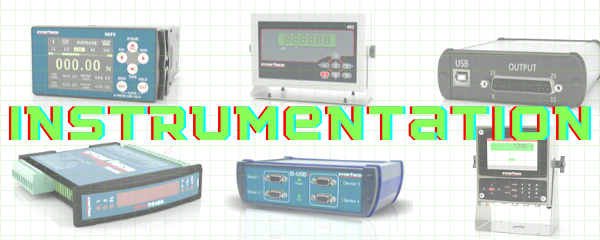
Interface provides dozens of instrumentation options to complete any test and measurement system. When evaluating your sensor requirements, it is valuable to also consider your instrumentation needs.
#1 – Know your power supply requirements, amount of filtering that is fixed or adjustable, input range, scalability, and zero adjustment range. #2 – The output signal is directly affected by input voltage. It’s important to maintain a stable excitation voltage. #3 – Make sure your data acquisition systems work very well with low-level mV signals as well as high-level and remember, a DAQ system won’t always provide stable excitation voltage, so connect to a sensor that does. #4 – Considerations for your interface module and software are determined by bit resolution, number of channels, sample rate, software features, and type of output requirements. #5 – Filtering can help reduce noise in the output signal. #6 – Digital signals are less susceptible to noise and more secure, and digital signals allow multi-directional transmission simultaneously.
Solutions for Assembly and Production Tools
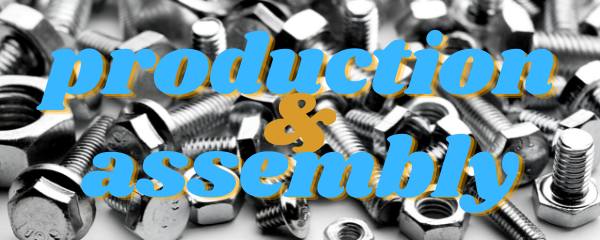
Bolts and screws are used to secure different pieces or components together for nearly every product imaginable. When it comes to large machinery and production tools, accuracy and durability are paramount to the safety of the workers and consumers. These assembly and production tools are not like your typical “do it yourself” furniture bolts and hex keys. Automated precision is needed for certain objects to be tightened to the exact measurement, and no exceptions are permitted.
Interface provides force and torque measurement solutions for all types of industrial automation and toolset testing. These components are used in thousands of testing applications that ultimately are utilized in the building of products. In this Bolt Fastening and Torque Application example, we provided an LWCF Clamping Force Load Cell Load Washer in conjunction with a T12 Square Drive Rotary Torque Transducer to align force and torque measurements to desired levels and determine the exact bolt force and tightness. Read more here.
Interface load cells and various sensors work well in vehicles that are used in water and other submersible use cases. We offer a range of technologies that can wirelessly transmit data underwater and in harsh weather conditions, making them perfect for equipment used around and in water. From yacht rigging inspections to commercial fishing wire rope testing, Interface has been a long-time supplier of measurement and weighing devices to the maritime industry. These specialized load cells operate in underwater submersions at different capacities and reliably relay information to those at the surface level for accurate sensor readings.
Interface has various load cell designs that can regulate harsh maritime situations in use cases, such as underwater tension lines, underwater oil drilling, and storm and tsunami monitoring. Read more about offshore and nearshore solutions here.
Did You Miss Any of the 2021 Forceleaders Events?
We just hosted our 5th ForceLeaders event this year. These events take a deep dive into some of the most frequently asked questions about products and services. All our events are recorded and available on our YouTube channel. Here is a quick access guide to this year’s events:
FORCE SENSORS ADVANCE INDUSTRIAL AUTOMATION – Randy Frank at Sensor Tips poses the following question: How can force-sensing be integrated for Industry 4.0 upgrades? He notes, “For Industry 4.0, force measurement solutions providers are integrating actuators that move and control a mechanism or system with load cells to create fully automated force test systems.” READ MORE
FORCE MEASUREMENT IN FOOD PROCESSING AND PACKAGING –Like many industrial facilities, organizations are pushing hard to integrate new technology and automation that makes processes faster, more adaptable, and smarter. READ MORE
MEDICAL TABLET FORMING MACHINES – For the medical industry, accuracy is an absolute imperative for devices used in every stage, including diagnosis, surgery, health monitoring, and even aftercare. Learn more about why medical industry manufacturers turn to Interface for sensors used in equipment making pharmaceuticals and OTC tablets. READ MORE